


This year’s commemoration of International Women’s Day calls us to examine the structural barriers to equal justice: discriminatory laws, weak legal protections, harmful practices, and social norms that erode the rights of women and girls everywhere. According to UN Women, the United Nations agency for women's rights, women and girls have just 64 per cent of the legal rights that men hold in 2026. If progress continues at the current pace, it will take 286 years to close legal protection gaps.
Conflict and instability often deepen existing inequalities, exposing women and girls to heightened risks of violence, exclusion, and discrimination. In many fragile settings, justice systems are weakened or shattered entirely, leaving survivors of gender-based violence without protection or recourse. Beyond immediate security, protecting women’s rights requires strengthening institutions, addressing the root causes of violence, and providing women with safe spaces to rebuild their lives after conflict.
United Nations peace operations take women’s perspectives into account to address these unique challenges. Peacekeepers support national authorities and institutions, engage with communities, and help build systems that respond to the specific risks and needs of women. From hosting mobile courts and deploying mixed peacekeeping teams, including in leadership positions, to supporting political participation initiatives and survivor-centred services, peacekeeping missions advance women’s rights and access to justice.
1. Restoring women’s access to justice
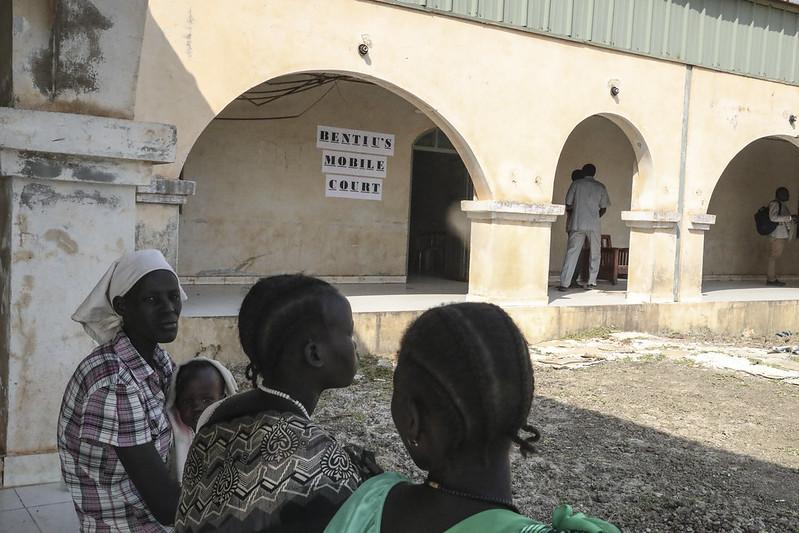
Peacekeeping missions work to rebuild police services and justice systems in contexts where conflict has severely weakened or destroyed them. This work is particularly important for women and girls, who are disproportionately impacted by sexual violence in conflict areas, accounting for at least 95 per cent of reported cases. In South Sudan, where armed conflict spiked last year, more women were subjected to sexual violence in the first quarter of 2025 than in all of 2024. Many survivors of gender-based violence are afraid to report cases for fear of retaliation, stigma, or not being believed. For those in remote areas, access to police stations and courts is difficult, even dangerous, due to ongoing violence.
To bridge that gap, peacekeeping missions, supported by the Justice and Corrections Service, provide judicial support through mobile courts. In South Sudan, the UN peacekeeping mission UNMISS deployed mobile courts to remote areas where residents had never accessed formal justice.
“The mobile court will address cases outside the jurisdiction of traditional leaders, including murder, sexual and gender-based violence, conflict-related sexual violence, and forced and early marriage. Justice and accountability are key to decreasing crime, reducing violence against women, and improving security,” then acting Head of the UNMISS Field Office in Unity, Stella Abayomi said as a mobile court was first deployed in Leer county in April 2025, one of the hardest hit regions since the onset of the civil war in 2013.
These temporary tribunals are making a concrete difference: hundreds of cases have been heard across the country, many of them related to violence against women. In Yei, some 150 kilometres from the capital Juba, ten judgements were issued by the mobile court, nine of which related to sexual and gender-based violence. All of them resulted in convictions, encouraging more women to seek justice.
UNMISS and its partners also supported the training of new investigators in southern Unity, with a focus on handling sexual violence cases, an essential step towards building national capacity beyond the lifespan of individual mobile courts.
However, progress remains fragile. The current UN liquidity crisis has forced UN Peacekeeping to reduce its footprint, affecting its missions’ capacity to provide critical support to women’s rights and access to justice. In her address to the Security Council on 12 November 2025 marking the 25th anniversary of the Women, Peace and Security agenda, UN Women chief Sima Bahous warned: “In this fragile environment, withdrawal of resources and capacity is imprudent at best, catastrophic at worst,” stressing that South Sudan’s gender-based violence crisis - threatening 2.7 million people -makes continued peacekeeping support essential.
2. Increasing women’s participation in peacekeeping
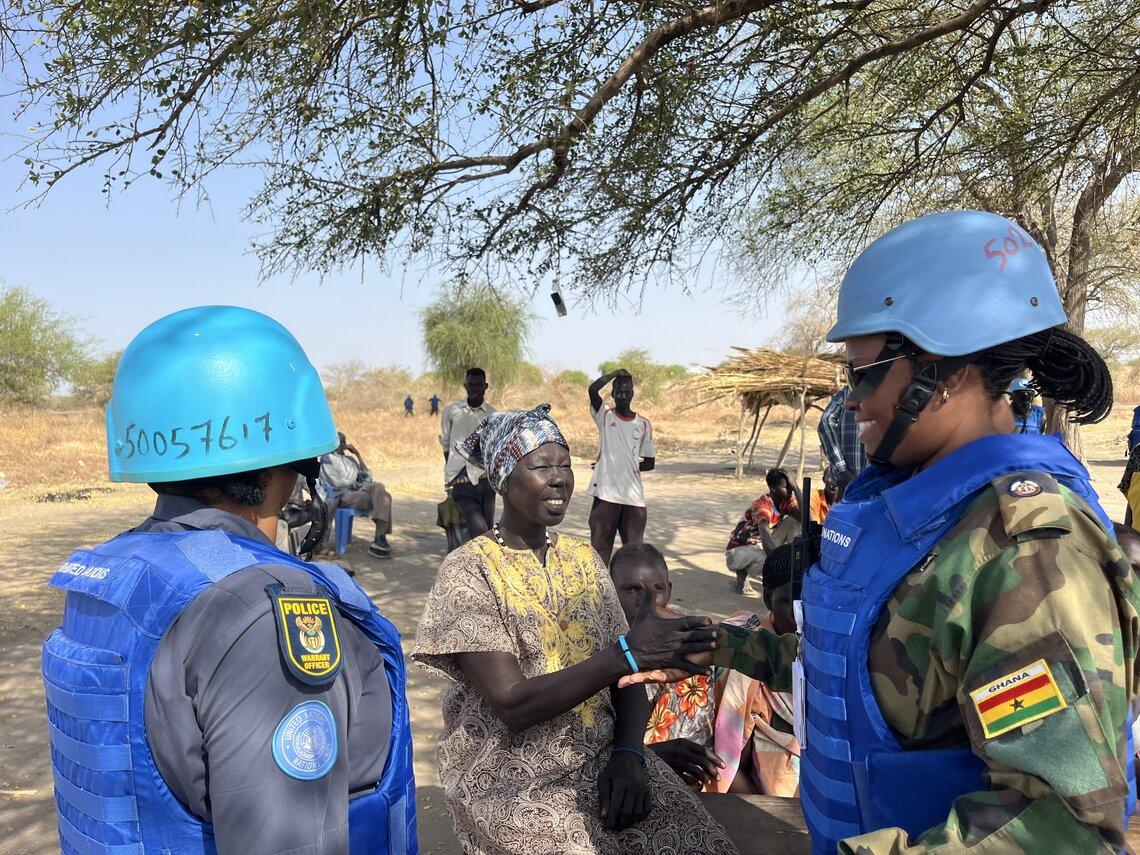
Whether on patrols, at checkpoints, gathering intelligence, or engaging with communities, women peacekeepers help facilitate communication with women and contribute to strengthening the impact of peace operations.
In 2025, Major Swathi of India was recognized with the United Nations Military Gender Advocate of the Year Award by UN Secretary-General António Guterres for her work to address gender-based violence in Malakal, South Sudan. Through her initiative, ‘Equal Partners, Lasting Peace’, she deployed frequent mixed gender patrols, allowing women to feel more comfortable sharing their concerns about early marriage and conflict-related sexual violence.
UN peace operations address the specific protection needs of women and girls before, during, and after conflict. This approach allows risks to be detected and prevented, strengthens trust with communities, and ensures protection reaches those most in need. In the Democratic Republic of the Congo, the Central African Republic, and Abyei, women peacekeepers and mixed UN community engagement teams have mapped areas more subject to conflict-related sexual violence and adapted patrol routes, helping prevent attacks and allowing women to carry out daily tasks safely.
Increasing women’s participation in peacekeeping efforts means more impactful and effective operations. Yet more diversity requires more structural change in national military contingents and police units, where women are often underrepresented.
Entrenched gender and cultural biases, discriminatory policies, and inadequate facilities or equipment still prevent women from performing to their full potential. To address these barriers, the Elsie Initiative Fund provides technical and financial support to troop- and police-contributing countries, enabling initiatives from strengthening policies and leadership training, to national recruitment campaigns. In Uruguay, the Fund supported family grant schemes for single-parent households deployed in the field. Within UN peace operations, it also supports practical improvements such as sanitation kits and ablution facilities.
3. Promoting women’s participation in peace and political processes
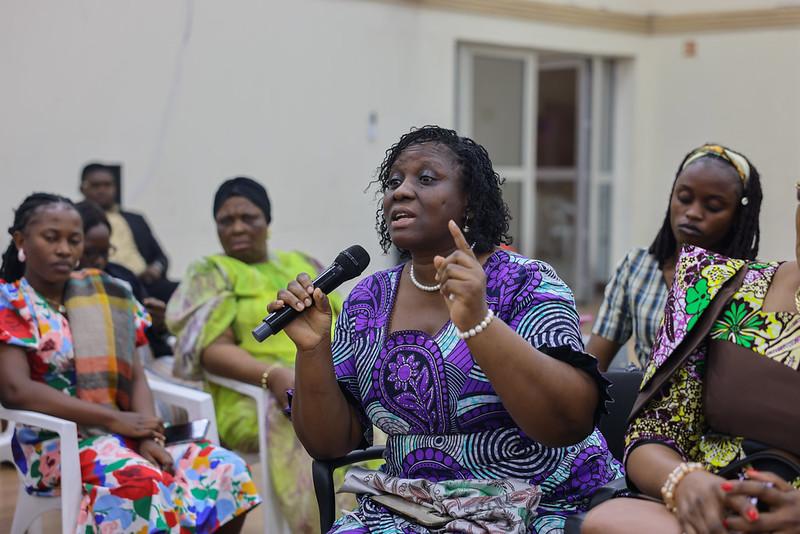
Women’s meaningful participation in peace and political processes is central to the protection of their rights. When women are included in conflict resolution and political processes, they help shape laws and institutions that strengthen their access to justice. But in conflict zones, where institutions are weak or in recovery, women’s access to politics is often limited.
In the Democratic Republic of the Congo, the United Nations Organization Stabilization Mission, MONUSCO, plays a critical role in advancing women’s rights, increasing political participation, and ensuring women's inclusion in peace processes. The mission works with civil society organizations, national authorities, and women leaders. For almost a decade, it has helped establish networks of women mediators in multiple provinces, supporting community dialogue and early warning systems. Across the country, Congolese women are resolving land conflicts, mediating between communities, and raising awareness among young people to lay down their arms.
"Too often, discussions about peace take place without the voices of mothers, survivors, or farmers. The peace we want cannot be decided without our participation," explains Mrs. Benge Mukengere, mediator from Beni, in North Kivu.
In Bunia, MONUSCO supported local mediation through the "Ituri Women's Collective," bringing together thirty-six community leaders, including twenty women and five traditional chiefs. This dialogue enabled women from two sparring communities, the Lendu and the Hema, to rebuild trust after years of conflict.
Similar initiatives across conflict-affected areas have helped create forums that promote more active participation of women in peace efforts. MONUSCO integrates gender perspectives across its activities, from the protection of civilians to security sector reform and disarmament efforts, and demobilization and reintegration processes.
4. Supporting survivors’ access to justice and strengthening accountability
“We cannot allow a culture of silence or indifference to thrive when women are being killed in our homes, our neighbourhoods and our streets,” Alban Zogaj, deputy mayor of Pristina, Kosovo* said as a colourful mural was unveiled on a school building. Commissioned by UNMIK, the UN peacekeeping mission in Kosovo, the artwork features a woman surrounded by red shoes, symbolizing women who lost their lives to domestic violence.
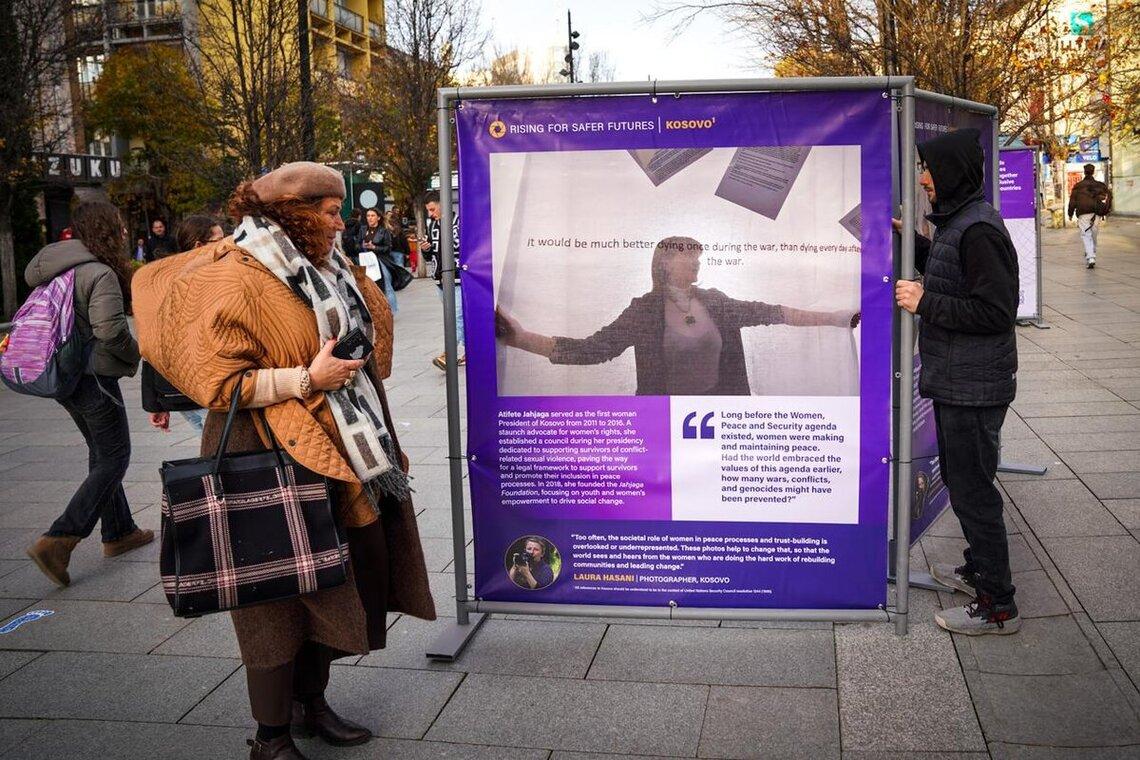
This exemplifies how creative platforms can raise awareness about sexual and gender-based violence in Kosovo. Through film and photography, UNMIK hosts events, screenings, and discussions, bringing together women’s rights and legal specialists with community representatives, including men, to address sensitive topics from early marriage to domestic violence. The conversations help challenge stigma and patriarchal mindsets that can enable gender-based violence and prevent survivors from accessing support and justice.
In Kosovo, violence against women remains a grave concern, with hundreds of cases reported each year. Beyond its critical advocacy work, UNMIK works with local authorities and civil society organisations to help strengthen protection mechanisms and enhance services for survivors. The mission equips women’s shelters with vehicles to reach those in need quickly.
Beyond emergency response, UNMIK helps tackle some of the barriers women face when trying to escape or recover from abusive relationships. This includes providing economic opportunities through training and support to women’s centres and initiatives that help women gain and sustain financial independence. The Mission also supports legal organizations raising awareness for women’s rights, including issues surrounding inheritance and access to property rights, critical pathways to economic protection and empowerment.
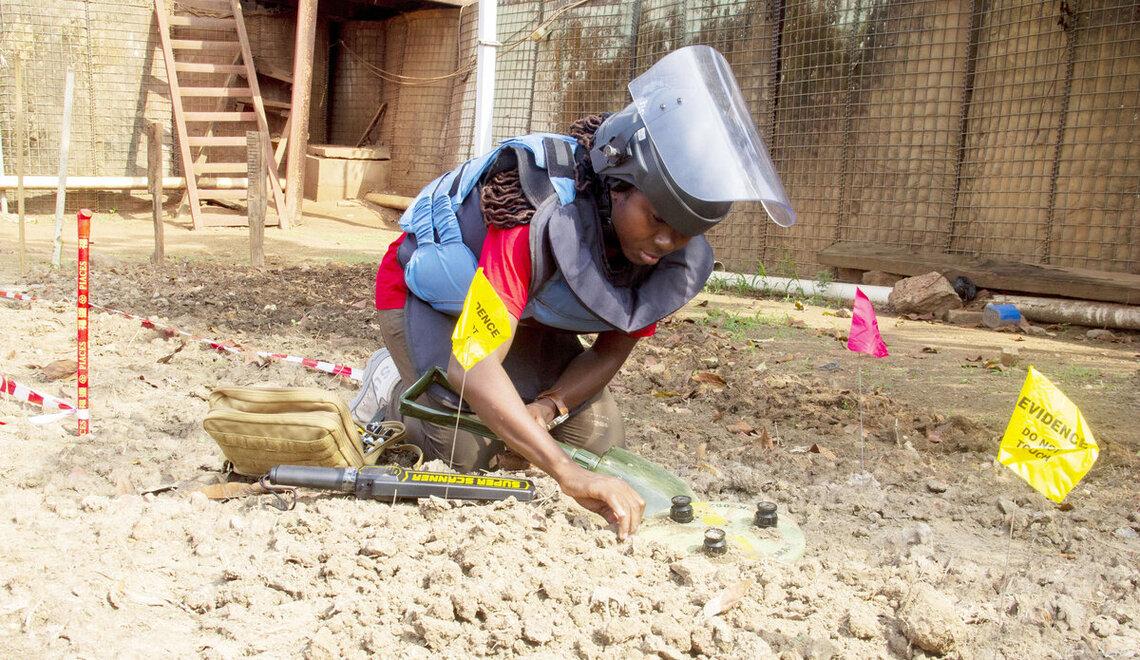
5. Provide safe spaces for women and free movement through mine action
Every day, some fifteen people are maimed or killed in landmine incidents around the world. Even after conflicts end, explosive ordnance continues to threaten the lives of civilians, including women and girls. To address this threat, thousands of deminers work to detect, defuse, and dispose of explosive devices, including in UN peacekeeping contexts. Mine action has historically been a male-dominated field, resulting in persistent gender imbalances. To address this, the UN Mine Action Service (UNMAS) has established minimum quotas for women’s participation. This requires capacity building, particularly in contexts where UNMAS operates, as women are often confronted with strong cultural and social barriers.
Two trailblazers are changing mindsets. Chief-Sergeant Laure Christelle Djimadoum-Narom-Ko made history as the first Central African woman deminer. She works alongside Luisa Diane Namboua in the Central African Republic, one of the most high-risk fields of peace operations. Hailing from Benin, Luisa was the first woman in her country to complete the advanced course qualifying personnel to safely dispose of most types of conventional explosive ordnance, including landmines, unexploded submunitions, and projectiles.
From providing explosive ordnance risk awareness sessions to physically securing the destruction of landmines, Chief-Sergeant Laure Christelle and Luisa's work is critical to MINUSCA, the UN mission in the country, and its efforts to protect civilians and peacekeepers. “If we are trained to the same standard [as men], we can deploy to the same tasks. I want other Central African women in uniform to see that it is possible,” said Chief-Sergeant Laure Christelle.
We can’t invest in peace without investing in women.
For decades, peacekeeping missions have promoted and protected women’s rights, not only by helping prevent violence, but also by strengthening the rule of law and the systems that make justice possible.
But lasting change also depends on Member States providing concrete support, equipping women on the ground with the funding, tools, and protection they urgently need to lead. The ongoing financial crisis in UN Peacekeeping risks jeopardizing years of progress. Fewer peacekeepers means fewer experts and capacities to support, fewer patrols, fewer mobile courts, and less awareness of risks and rights among communities.
Above all, it requires a renewed and united global push to place women at the heart of peace and security efforts, delivering real and measurable change for women and communities in conflict, and making clear that women are not optional but essential to creating lasting peace.
Women’s access to justice and to human rights is foundational to sustainable peace. We can’t invest in peace without investing in women.
*References to Kosovo shall be understood to be in the context of Security Council Resolution 1244 (1999).


