
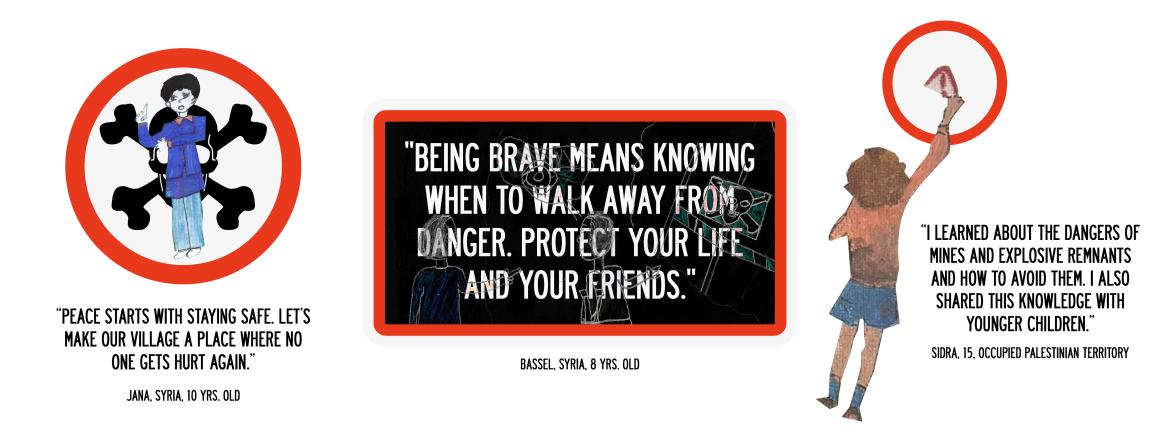
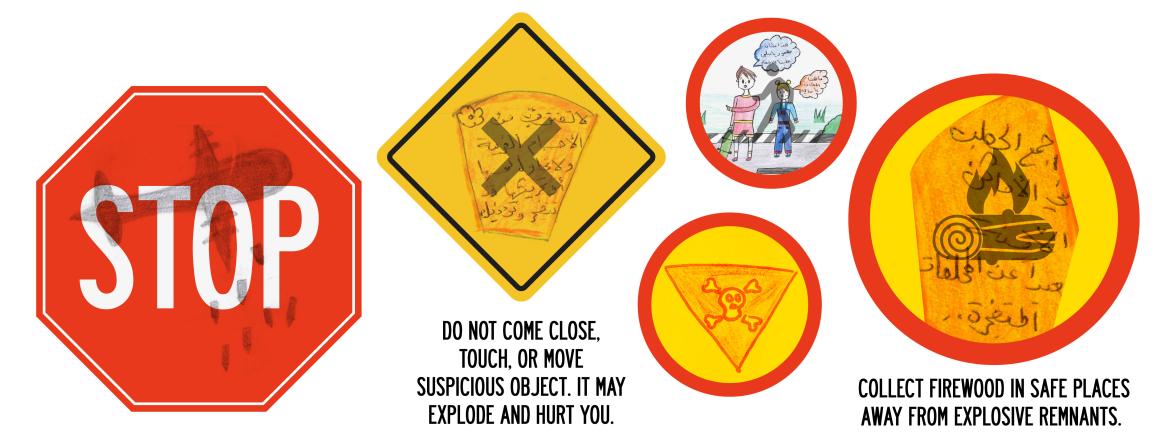
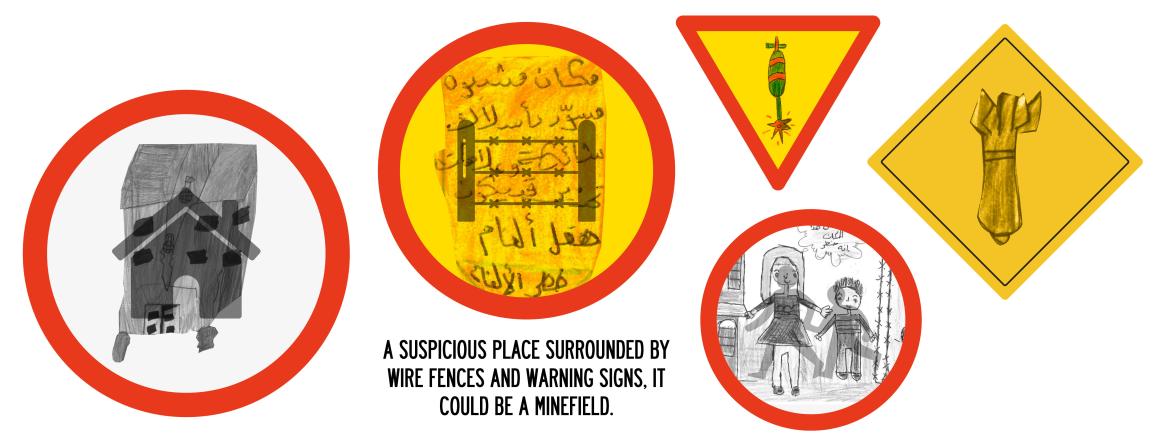
As conflict rages around the world, explosive ordnance contamination poses a pervasive and hidden threat to people’s lives, limbs and livelihoods, often for years after active hostilities have subsided. Curious children, drawn to strange-looking objects or simply keen to play in unfamiliar areas, are often most at risk.
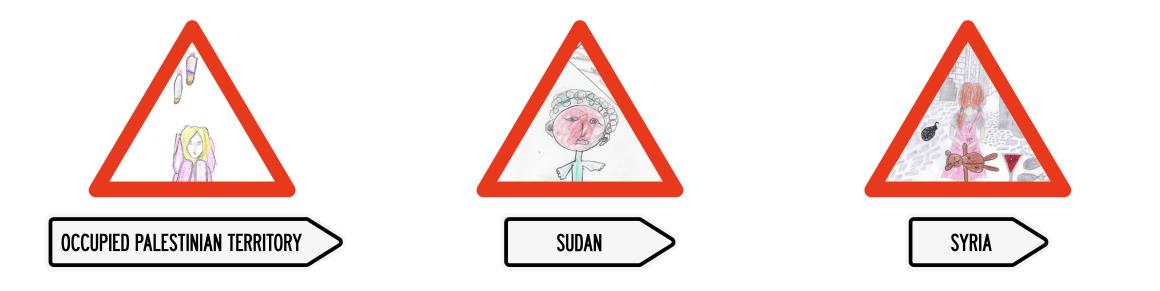
In recent years, the Occupied Palestinian Territory (OPT), Sudan, and Syria have experienced significant and complex conflict dynamics. While the nature of the conflict in each of these contexts differ, the impact of explosive ordnance contamination is the same: indiscriminate, deadly, and often hidden.
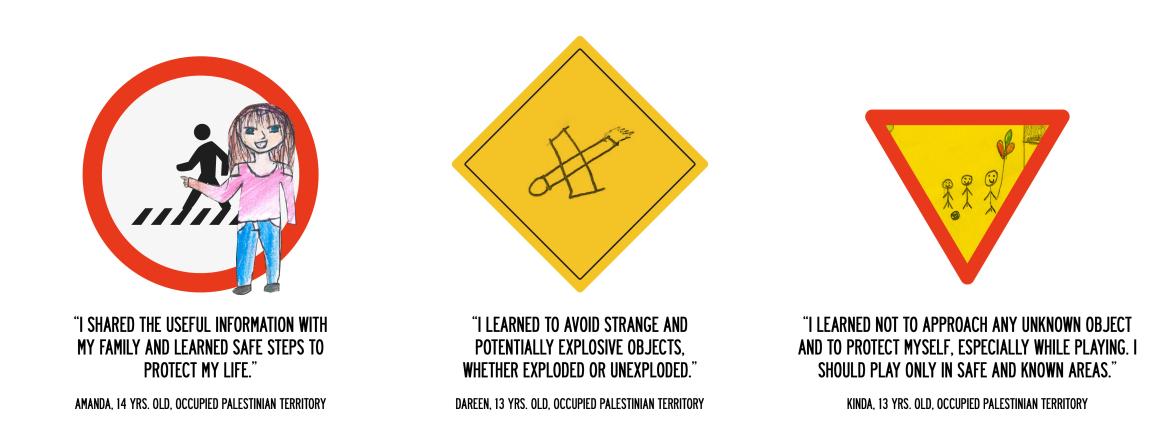
Often, the first to identify and warn about potential explosive threats are the people who live in affected areas. With a deep understanding of the landscape and where fighting occurred, as well as an ability to communicate appropriately and accessibly, community representatives – including children – help make their peers safer by sharing warning messages and encouraging safe behaviours. Across the world, UNMAS works with communities to raise awareness about explosive ordnance threats and teach safe behaviours through Explosive Ordnance Risk Education. These interventions support the resilience of people who often face complex and interwoven challenges in their day-to-day lives, ensuring safety and supporting recovery.
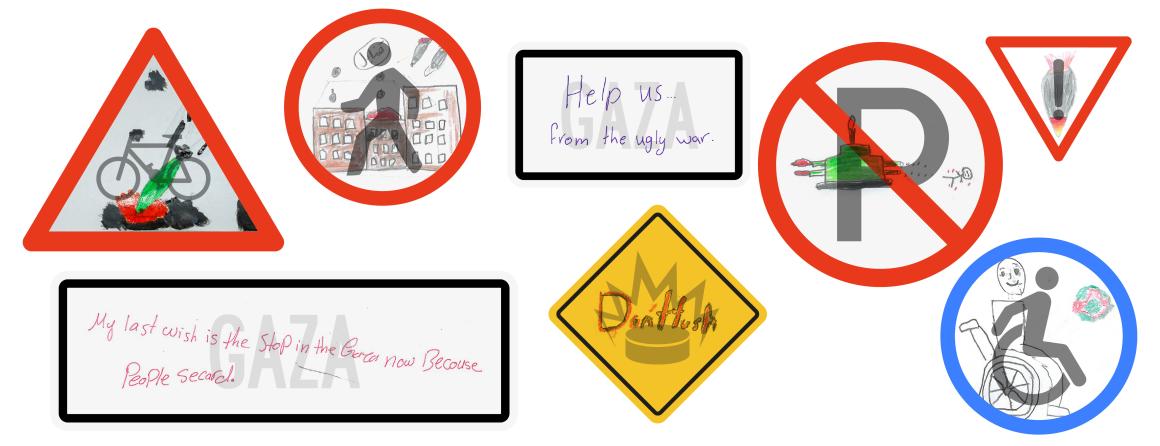
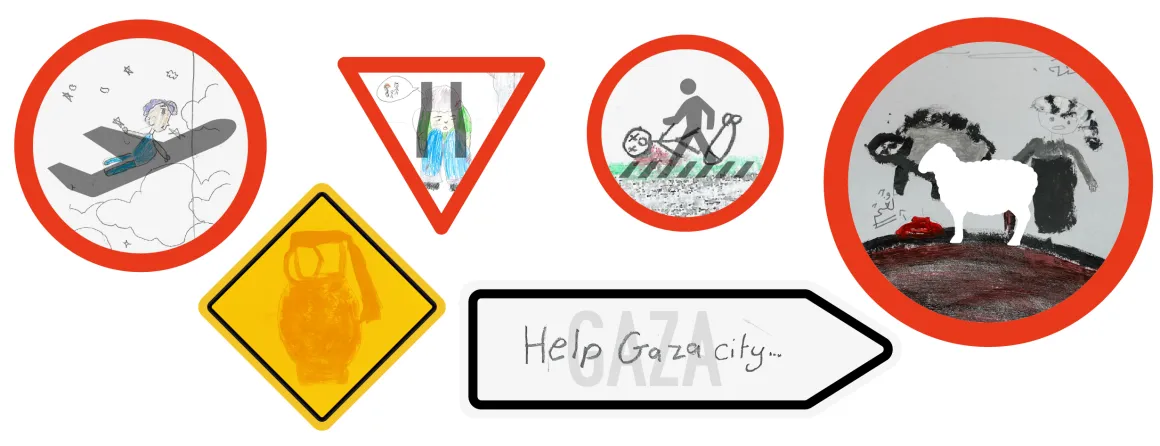
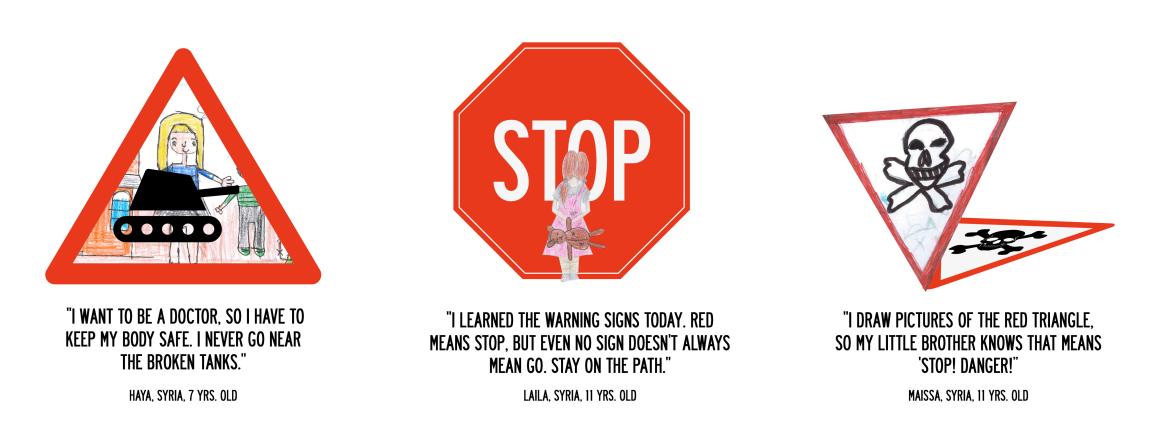
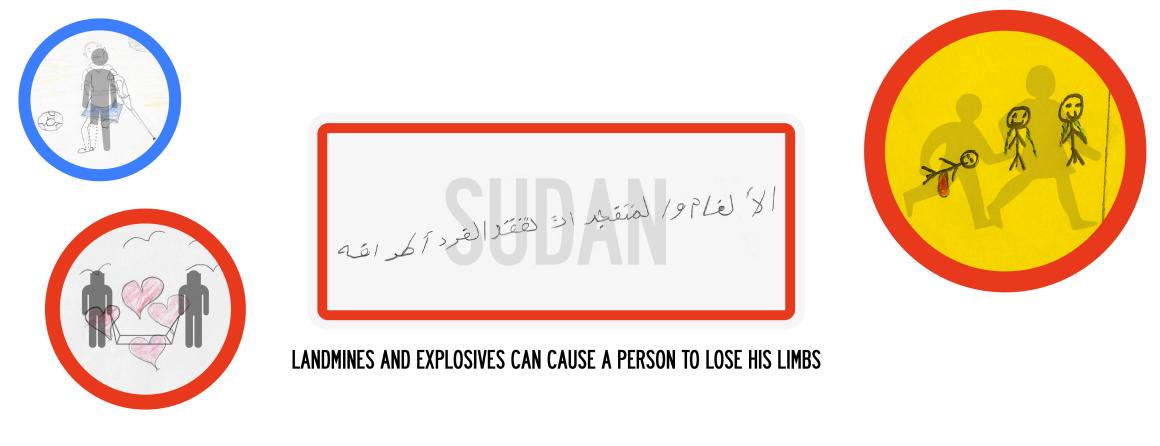
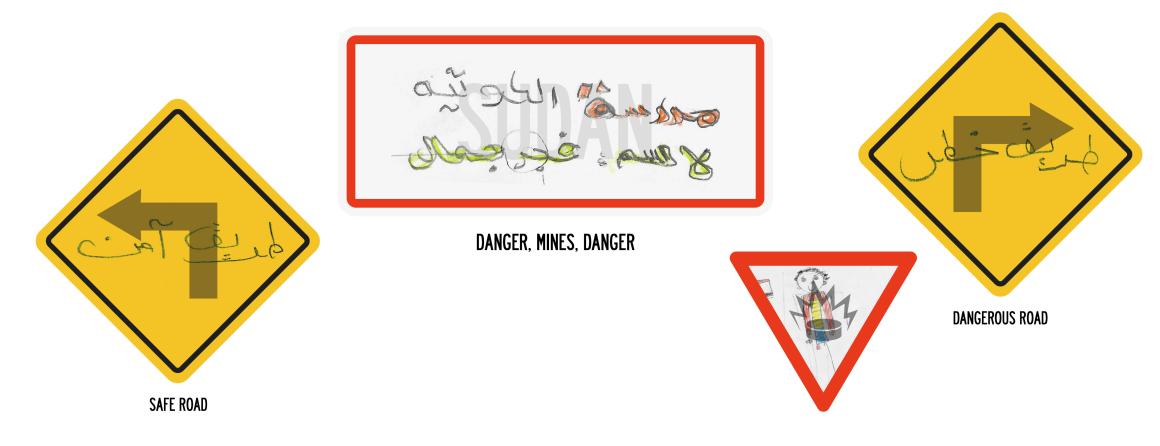
Through showcasing materials from the OPT, Sudan and Syria, the exhibition aims to highlight the universal and indiscriminate risks posed by explosive ordnance, how these threats are perceived by children across these areas of conflict, and the key role that affected communities play in championing safety messaging.
Occupied Palestinian Territory






Sudan






Syria






Thank You to our Partners
UNMAS is grateful for the commitment and flexibility of its donors and celebrates the dedication of its implementing partners. Most importantly, UNMAS stands with the communities forced to live alongside explosive ordnance threats across the world, and reiterates its commitment to continue to advocate for safety and to mitigate the deadly impact of these threats.
If you would like to display this exhibition in print, please send a request to Lee Woodyear at woodyear@un.org and UNMAS can provide printable panels.
The drawings reflect the personal expressions and lived experiences of the children. The United Nations does not endorse the specific wording or messages; the exhibition aims to highlight the impact of explosive ordnance on children.